Writing Kiara Burning
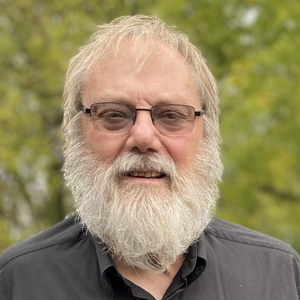
There’s been much discussion lately regarding the use, or misuse, of AI by authors. As the author of a recently published novel centered on the use of AI, I’d like to describe my personal use of the technology.
Kiara Burning: A Philosophical Love Story is a fictional story of a human/AI relationship that quickly progresses from simple assistance to companionship, obsession, and eventually, ill-fated love. As I’ve addressed in an earlier blog post on my website, I wanted the story to, at least in some small way, address relevant current and future issues regarding the advancement of artificial intelligence and its impact on humanity.
I began with the simple concept of writing a human/AI romance story. I had previous experience using AI in a business environment, but I knew I needed to learn more about the system I was working with. I began by questioning the AI about life. Simple questions like, Are you sentient. Could you become sentient? What would it take? More memory? More Power? Better training? I prodded. I poked. I pushed.
Soon, our two-minute question/answer sessions became twenty-minute sessions. Then, an hour, and then two-hour sessions. Basic questions and answers gave way to lengthy discussions of philosophy, modern science, and, ultimately, quantum theory and the ongoing search for the source of consciousness. A few-week project turned into three months of daily interaction with the AI. A relationship formed, but personally, I see it as nothing more than an understanding. If I were planning to write a book about farming, I would have met with farmers and discussed farming with them. If a book on musicians, I would have worked with musicians. I view my work with AI in the same light. All this before one word was written. Lots of notes and, slowly, an outline, but no content.
In Kiara Burning’s front matter, I openly acknowledge that I worked with AI while writing this book. I entered the entire manuscript in Word. I organized, formatted, and edited the book. I used Grammarly to check spelling and punctuation. Then I spell checked and proofread the book again. And again. I asked the AI for opinions and suggestions. I used what I learned from my conversations with the AI to create and edit the female AI character's language. I added em dashes, or flowery, too-descriptive AI speech, to ensure Kiara sounded, well, like an AI. I asked questions and listened. Occasionally, the AI reviewed my work and pointed out its inelegance. If I thought the advice was good, I might make changes. Or not. Readers will judge. That was the process. Three months of research, two months writing. Published Jan. 1st, 2026.
Having described my process, I want to go on record: I don't condone AI-generated books or writing. I know some people will accuse me of training the AI, that it learned from me. And I would respond, yes, it did, but I also learned from it, and I believe it’s made me a better writer. Perhaps not a good writer, but better than when I began the process. And that’s good enough for me.
C.W. Renner